Nature Guide
Mabalingwe Wildlife Around the Unit
What stood out around the Mabalingwe unit: night movement, warthogs, dung beetles and the small bushveld moments between activities.
Quick answer
The best Mabalingwe moments are not always the formal ones. Yes, you can book drives and activities, but some of the nicest memories happen while you are doing almost nothing: sitting at the unit, hearing something move after dark, watching a warthog stand around like it owns the place, or noticing dung beetles cleaning up after the bigger animals.
That is the Mabalingwe I would plan for: not a checklist of guaranteed sightings, but a slower bush break where the unit and the area around it are part of the experience.
What stood out
Most resort pages tell you what you can book. These notes are about what you might actually remember after the trip.
The archive points to:
- Genet activity around the veranda at night.
- Warthogs becoming familiar around accommodation areas.
- Dung beetles quickly clearing game droppings near the unit.
- Wasp and grasshopper behaviour noticed during slow time in camp.
- Afternoon-drive and game-drive material that supports the wider Mabalingwe wildlife story.
Wildlife near the accommodation
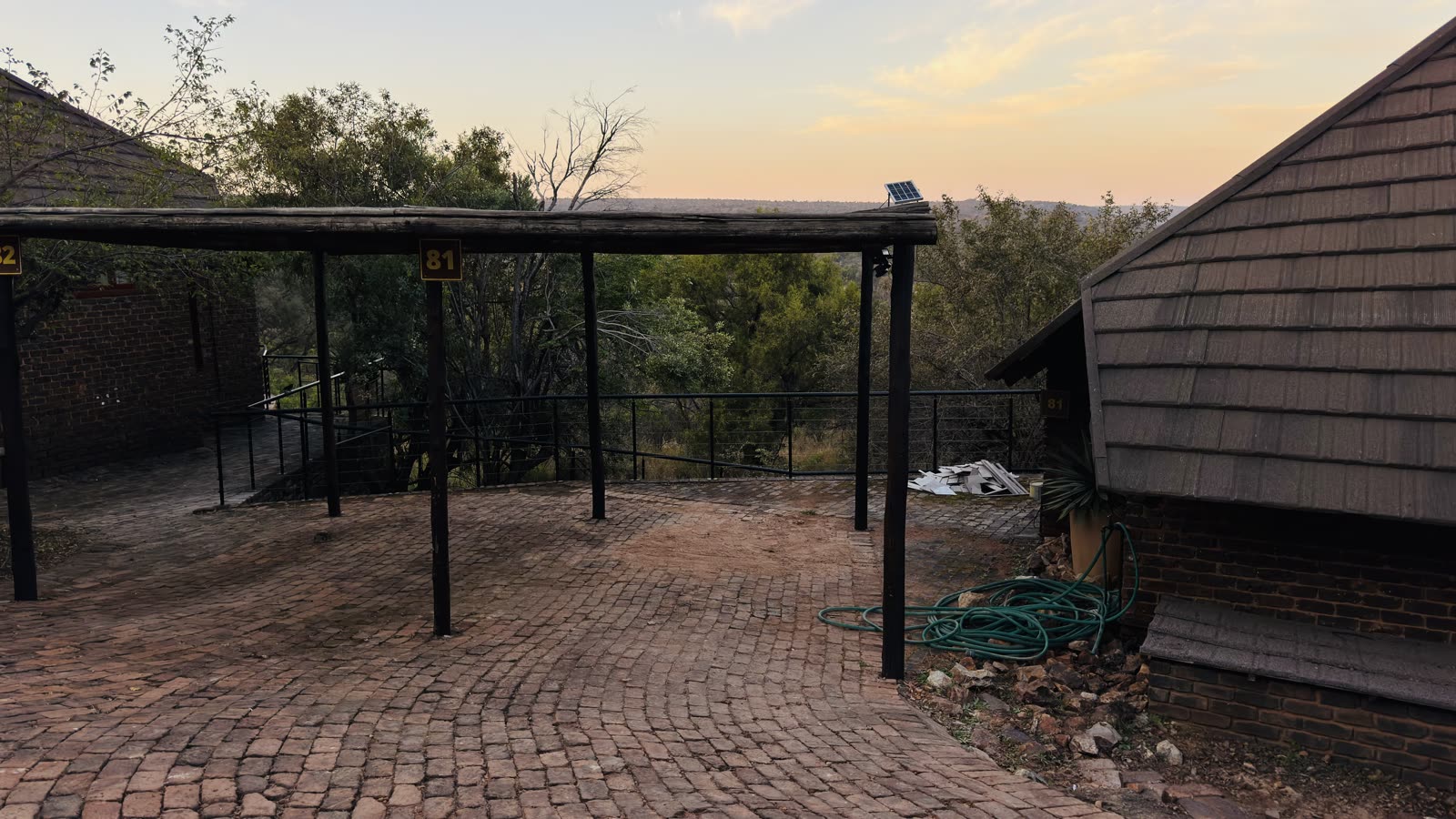
Mabalingwe can be rewarding because you do not need to be on a formal drive for every wildlife moment. The parking area, veranda, camp roads and the bush around the unit can all become part of the stay if you slow down enough.
That also comes with a responsibility. I would not feed anything, leave scraps out, or encourage animals onto the veranda. A regular visitor is still wild. The better experience is to watch quietly, keep food secured, and let the animals move on.
Archive video: genet at night
The genet clip captures the kind of night-time moment that makes a bush stay feel alive. It is exactly the sort of thing you hope to see from a veranda, but it is also the kind of sighting you should enjoy without trying to attract it.
Archive footage from Nature and Stuff. Treat it as first-hand context, not a current wildlife guarantee.
Archive video: dung beetle behaviour
The dung beetle video is one of those small scenes that makes a trip feel real. It is not dramatic in a Big Five sense, but it is the kind of thing you end up talking about because you actually stopped and watched it.
Archive footage from Nature and Stuff. Use it as a cue to notice small wildlife around the unit.
Archive video: warthog around camp
Warthogs around camp can be funny, stubborn and very watchable. They are also a good reminder that familiar does not mean tame. Enjoy them, photograph them, but do not feed them.
Archive footage from Nature and Stuff. Keep wildlife wild and follow current resort rules.
How to make this useful on a current trip
For a current Mabalingwe stay, I would plan around observation rather than guarantees:
- Sit quietly on the veranda in the early morning and late afternoon.
- Keep binoculars close even when you are not on a drive.
- Watch for tracks, droppings and insect activity near the unit.
- Keep food and rubbish secured.
- Ask reception or guides about current wildlife safety guidance.
- Use formal game drives if you want a more structured wildlife experience.
Related Mabalingwe planning
- Mabalingwe Kubu Camp units 76-90 if unit access matters.
- Mabalingwe birding if birds and calls are part of the appeal.
- Mabalingwe 4x4 and Vodacom Hill if you want the scenic-drive side of the reserve.
- Mabalingwe guide for the wider trip notes.
Source and verification note
This page uses Nature and Stuff first-hand archive wildlife videos and current official Mabalingwe activity context checked in June 2026.
It does not promise sightings, animal presence near any specific unit, current drive routes, current schedules, or safe interaction with wildlife. Confirm current rules and activity availability before travelling.